CAESAR AUGUSTA IN THE CLASSICAL SOURCES

|
|
CAESAR AUGUSTA IN THE CLASSICAL SOURCES |
|
|
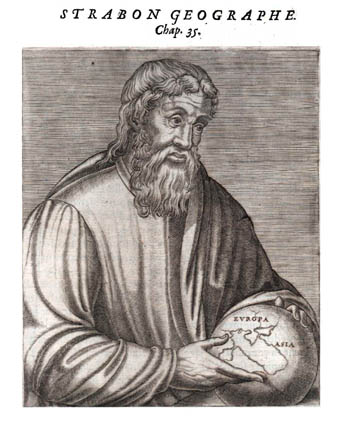
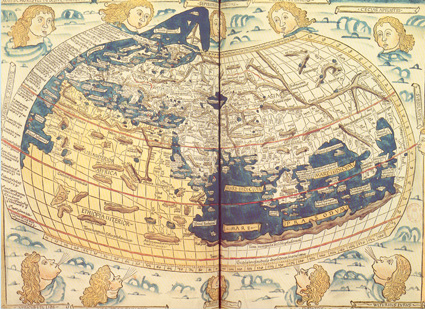
Caesar Augusta, together with Bilbilis, is the Roman city in our modern Aragon that have more quotations in the Greek and Roman literature, although, unfortunatelly, there are only few bibliographical references in the Antiquity, as a whole; a part of these quotations came from text related to religious councils and notices about bishops and christian people, so that these references about the city are dated in the Late Empire or even in the Visigothic time. On the other hand, we must say that the information that the classical literature gives us about the city are mere quotations, almost testimonies, so that practically we have not information about any aspect of the city. As in the case of Bilbilis, some quotations are not referred to the Roman city, but its location and its relationship to the territories with Celtiberian population: Strabo III 2, 15, quotes it as example of the new foundation of Roman cities in Hispania and in Celtiberian territory ; Strabo III 4, 10, quotes it when he referred to the Roman cities in the Ebro valley together with Celsa, but he does not give more information. We found another quotation of the city in Pliny III 3, 24, also about political aspects of the Celtiberians an pre-Roman people, because he indcates that the city -we add that the city as capital of the conventus iuridicus Caesaraugustanus-, successor of the ancient Salduvia, sheltered to 55 nations. Finally Ptolemaeus, Geography II 6, 63, quotes Caesar Augusta as city of Edetania [in fact, of Sedetania]. |
|
Portrait of Strabo. |
|
|
|
|
|
The Itinerario Antonino, probably made in the III century a. C., but modified en the IV century, under the emperor Diocletian, is a private text, but it is based on official text, where there were indicated the main Roman roads and the cities or mansiones –breeding establishments to post and to have a rest- that existed between one point and another in a certain itinerary. In the case of Caesar Augusta (Saragossa), the city is quoted in some occasions as road crossing in the ways that crossed over the Iberian peninsula from the east, from Tarraco (Tarragona), up to the west, up to Emerita Augusta (Mérida) and Asturica Augusta (Astorgar) and also in some ways that crossed it from north to south, up to the Gaul and up to Carthago Nova (Cartagena) and Corduba (Córdoba). One of the last quotation of Caesar Augusta is offered by the Anonymous of Ravenna IV 43 in the VII century; he related Bilbilis with other Roman cities in a Roman way. The so called Chronicals Cesaraugustan (Chronicorum Caesaraugustanum reliquae o Chronica Caesaraugustana), writen at the beginning of the VI century d. C. and from which short fragments have been preserved, offer to us some concise quotations about the city. |
|
|
|
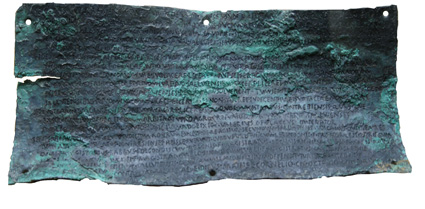
Related to the quotations of the city in the epigraphical sources, probably the most valuable information is given by the Bronze of Áscoli, that quotes a cavalry squadron from Hispania, concretely fomr the Ebro valley commanded by citizens of Salduie (the antecesor of Caesar Augusta), and by the Tabula Contrebiensis with a legal litigation about water between the cities of Alaun (the modern Alagón) and Salduie. On the other hand, there are only a few inscriptions found in the city of Saragossa from the ancient Roman colony and there are also a few inscriptions outside the city where Caesar Augusta was quoted. |
 |
|
|
|
|
|
|
Finally, we can found some quotation of the city of Caesar Augusta, although hardly with information, in the works of Christian authors or works with religious contents: Prudentius, Braulius, the council of César Augusta (the city is also quoted in other councils that took place in other cities as Elvira, Arlés, etc.), Ciprianus' letters. |
||
|
|
|
|
|
|
|
Sources: - FATÁS CABEZA, Guillermo: Lo que el mundo antiguo escribió sobre Caesaraugusta, Zaragoza, 1977 - FATÁS CABEZA, Guillermo: Antología de textos para el estudio de la Antigüedad en el territorio del Aragón actual, Zaragoza, 1993, p. 79 |