THE ROMAN PANTHEON :
THE OLYMPIC GODS IN ROME
|
|
THE ROMAN PANTHEON : THE OLYMPIC GODS IN ROME |
|
|
Due to the absent of an own mythology and due to the Greek cultural influence, the Romans, receptive to foreign cults and religions, took the Greek Olympic gods and some others and introduced them in Rome with equivalents from their own Roman divinities. However, the introduction of the Greek gods was made to a large extent by the Etruscans who since the VI century b. C. transmitted these Greek influences and some other Etruscan influences to the Romans, being formed the Pantheon of the Roman gods. |
||
|
|
|
|
|
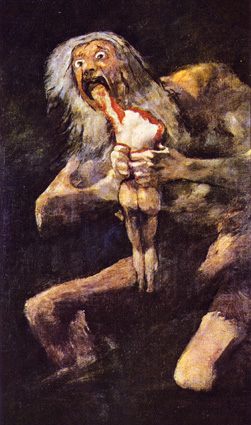
Uranus, from the Greek Οὐρανός, was identified with the Sky. Kronos, from the Greek Κρόνος, confused very often with Χρόνος –Time-, was, at any case, the god of the time, he was dethroned by his son Zeus and he was assimilated by the Romans with Saturnus, a Roman divinity that seems to be linked in its origin with the harvesting in a Golden Age previous to the age when the agriculture arose.
Picture entitled "Saturnus eating one of his children", Francisco de Goya. Museo del Prado (Madrid) |
|
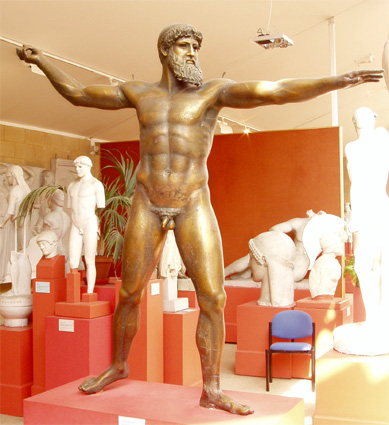
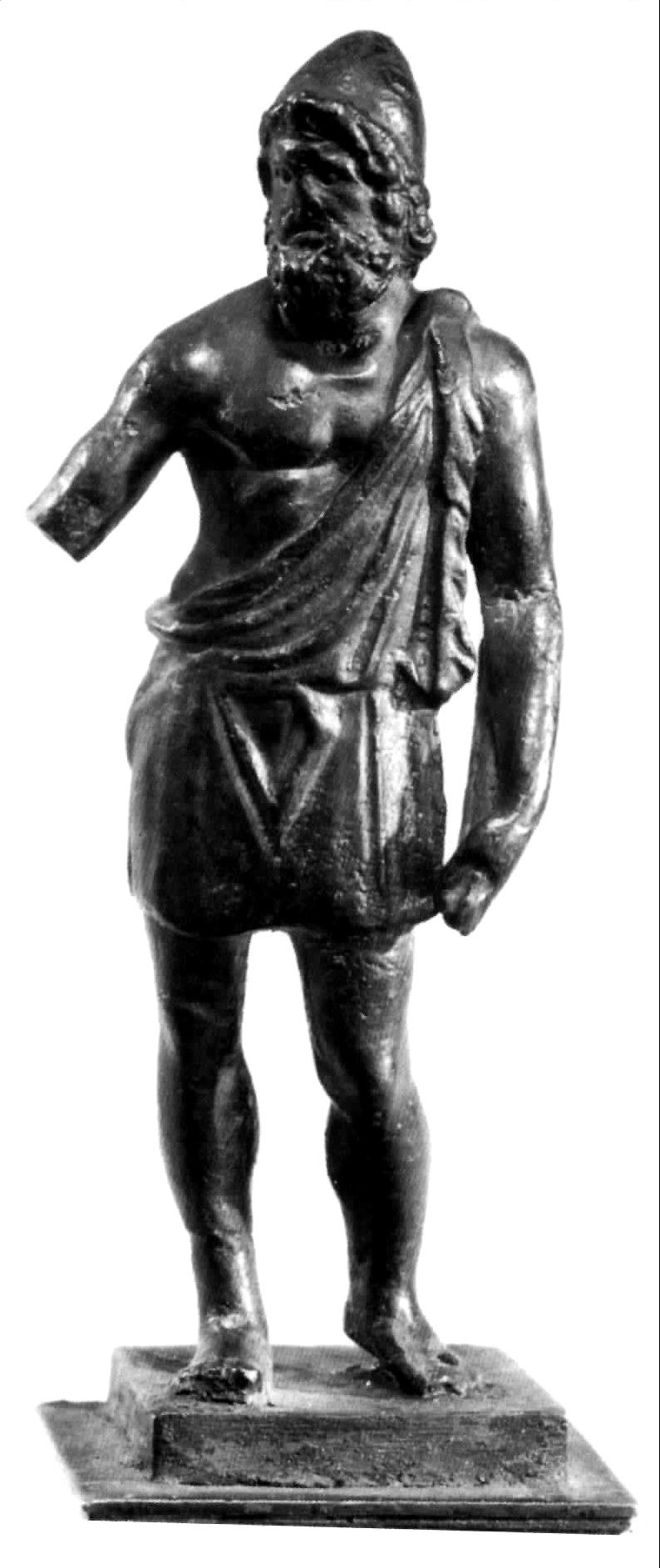
Zeus, from the Greek Ζεύς, god of the storms and the thunder, had Jupiter –in Latin Iuppiter- as Roman equivalent; the Latin name is composed by the same Indo-European root as Zeus, *dyew more the Latin word with Indo-European origin too pater<*pəter-; he is the most important and powerful god in the Greek Olympus and in the classical Roman Capitoline Triad together with Juno and Minerva.
Bronze statue of Zeus or Poseidon; copy in the Museum of Classical Archaeology. Cambridge. (Photo: Roberto Lérida Lafarga 24/07/2007) |
|
|
|
|
|
Poseidon, from the Greek Ποσειδῶν, god of the water and the earthquakes, Zeus’ brother, had Neptunus as Roman equivalent.
Bronze statue of Zeus or Poseidon; copy in the Museum of Classical Archaeology. Cambridge. (Photo: Roberto Lérida Lafarga 24/07/2007) |
|
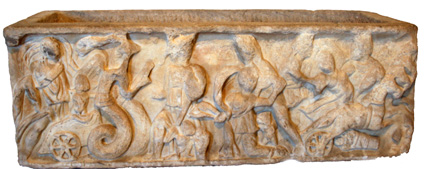
Hades, from the Greek Αἵδης, god of the souls of the dead and the subterranean world, Zeus’ brother, had Pluto as Roman equivalent.
Sarcófago donde se representa, en el centro, el rapto de Perséfone por Hades. Museo Nacional de Arqueología de Tarragona. (Photo: Roberto Lérida Lafarga 06/06/2008) |
|
|
|
|
|
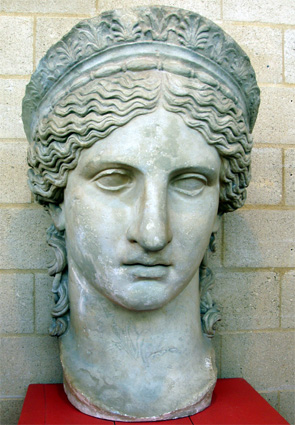
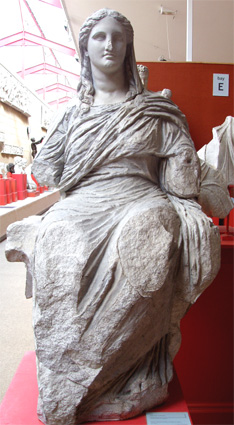
Hera, from the Greek Ἥρα, goddess of the marriage and the women, Zeus’ sister and wife, had Juno as Roman equivalent; however, the primitive Roman Juno seems to be linked to the young warriors; she formed a part of the classical Roman Capitoline Triad together with Jupiter and Minerva.
Bust of Hera known as Hera Ludovisi; copy in the Museum of Classical Archaeology. Cambridge. (Photo: Roberto Lérida Lafarga 24/07/2007) |
|
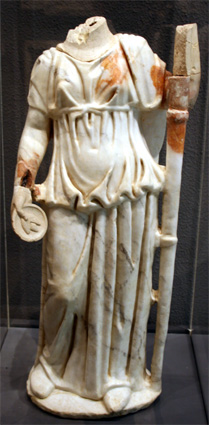
Demeter, from the Greek Δημήτηρ, goddess of the harvest and the cereals, Zeus’ sister, had Ceres as Roman equivalent.
Headless statue of Demeter-Ceres found in the Roman villa of La Malena (Azuara, Zaragoza), dated in the IV century d. C. Museo Provincial de Zaragoza. (Photo: Roberto Lérida Lafarga 03/01/2008) |
|
|
|
|
|
Hestia, from the Greek Ἑστιά, goddess of the home, Zeus’ sister, had Vesta as Roman equivalent.
Statue of Hestia; copy in the Museum of Classical Archaeology. Cambridge. (Photo: Roberto Lérida Lafarga 24/07/2007) |
|
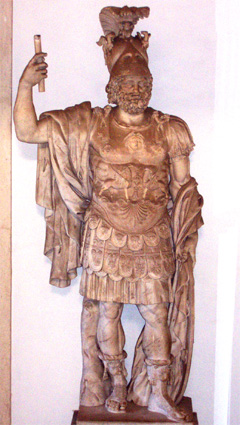
Ares, from the Greek Ἄρης, god of the war, Zeus’ and Hera’s son, had Mars as Roman equivalent.
Statua of Ares/Mars known as Mars Pyrrhus in the Musei Capitolini, Rome. (Photo: Roberto Lérida Lafarga 28/12/2004) |
|
|
|
|
|
Hephaistos, from the Greek Ἥφαιστος, god of the forge, blacksmith and lame, Zeus’ and Hera’s son and Aphrodite’s husband, had Vulcanus as Roman equivalent.
Statue of Hepahistos/Vulcanus. |
|
Aphrodite, from the Greek Ἀφροδίτη, goddess of the love, arisen from the Uranus’ semen and his sexual organs, thrown to the see by Kronos, Hephaistos’ wife, had Venus as Roman equivalent.
Statue of Aphrodite/Venus known as Venus of the Capitolium, in the Musei Capitolini, Rome. (Photo: Roberto Lérida Lafarga 28/12/2004) |
|
|
|
|
|
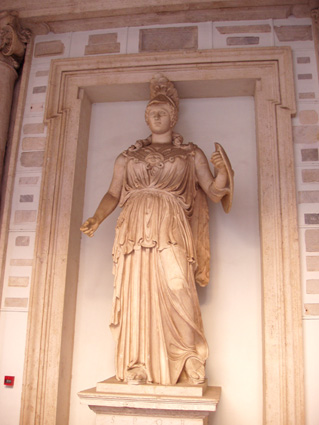
Athena, from the Greek Ἀθηνᾶ, goddess of the wisdom and personification of the prudence, Zeus’ and Metis’ daughter, had Minerva as Roman equivalent. Minerva was an Italic goddess of the craftsmanship –maybe an Etruscan goddess with Greek influence among the Etruscan-; she formed a part of the classical Roman Capitoline Triad together with Jupiter and Juno.
Statue of Athena/Minerva in the Musei Capitolini, Rome. (Photo: Roberto Lérida Lafarga 28/12/2004) |
|
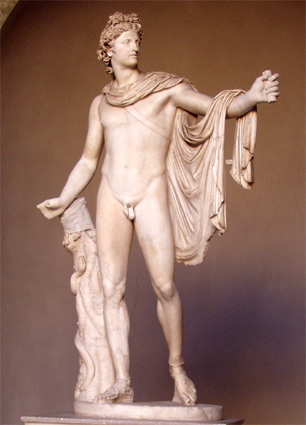
Apollo, from the Greek Ἀπόλλων, god of the medicine, the music, the arts and the sun, Zeus’ and Leto’s son and Artemis’ twin, is the only one among the Greek gods that has not Roman equivalent; so, the Romans called him Apollo too.
Statue of Apollo known as Apollo di Belvedere. Musei Vaticani, Rome. (Photo: Roberto Lérida Lafarga 30/12/2004) |
|
|
|
|
|
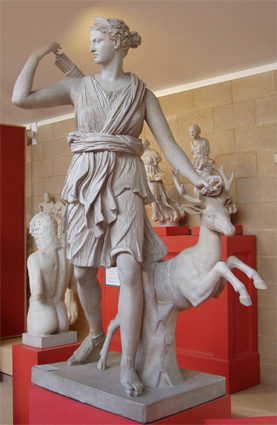
Artemis, from the Greek Ἄρτεμις, goddess of the hunting, the virginity and the moon, Zeus’ and Leto’s daughter and Apollo’s twin, had Diana as Roman equivalent.
Statue of Artemis/Diana; copy in the Museum of Classical Archaeology. Cambridge. (Photo: Roberto Lérida Lafarga 24/07/2007) |
|
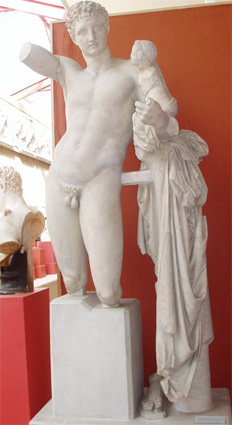
Hermes, from the Greek Ἑρμῆς, god of the merchants and thieves and messenger of the gods, Zeus’ and the Pleiad Maia’s son, had Mercurius as Roman equivalent; probably this god was introduced in Rome as a new god, when under the Greek influence, the Romans received the cult to Demeter and Dionisos linked to the Roman gods Ceres and Liber respectively.
Hermes with Dionisos child, work made by the Greek sculptor Praxiteles; copy in the Museum of Classical Archaeology. Cambridge. (Photo: Roberto Lérida Lafarga 24/07/2007) |
|
|
|
|
|
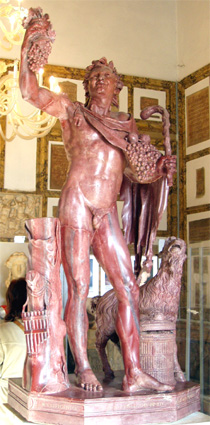
Dionisos or Bacchus, from the Greek Διόνυσος and Βάκχος, eastern god of the wine and the theatre, Zeus’ and Semele’s son; some scholars say that he had Liber Pater as Roman equivalent, although he had his own cult as Dionisos and Bacchus among the Romans who accepted his Greek name without equivalences with any Roman god; however, it is true that he was linked with Liber Pater.
Statue of Dionisos/Bacchus in the Musei Capitolini, Rome. (Photo: Roberto Lérida Lafarga 28/12/2004) |
|
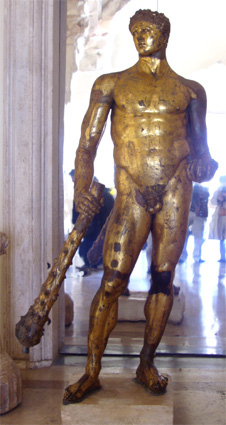
Finally, the Romans accepted and deified the Greek hero Heracles, from the Greek Ἡρακλῆς, under the name of Hercules.
Bronze statue of Heracles/Hercules in the Musei Capitolini, Romea. (Photo: Roberto Lérida Lafarga 28/12/2004) |
|
|
|
|
|
The Capitoline Triad, formed by Jupiter, Juno and Minerva, had a dedicated temple in the Capitolium hill, becoming these three gods and their temple symbol of Rome, so that in every city of the empire a temple dedicated to this triad was built. |
||
|
|
|
|
|
Nevertheless, we have to say that in many cases the introduction of these Greek gods is known by us only through the literature and their histories have been transmitted by the Romans in their artistic writings, like the Ovidius’ Metamorphoses, the Virgilius’ Aeneis, the poems of the great lyrical, elegiac and epigrammatic Latin poets, etc.; so, it is difficult to know what the Romans thought about these adopted gods and what was the degree of belief and faith that they had in these gods. |
||
|
|
|
|
|
|
|
SOURCES: - CARCOPINO, Jerôme: La vida cotidiana en Roma en el apogeo del Imperio, Madrid, 1993 - ESPINÓS, Josefa et alii, Así vivían los romanos, Madrid, 1987 - HACQUARD, Georges: Guía de la Roma Antigua, Madrid, 2003 - PAOLI, Ugo Enrico: URBS. La vida en la Roma Antigua, Barcelona, 1990 |