BILBILIS AUGUSTA: MUSEUM OF CALATAYUD
|
|
BILBILIS AUGUSTA: MUSEUM OF CALATAYUD |
|
|
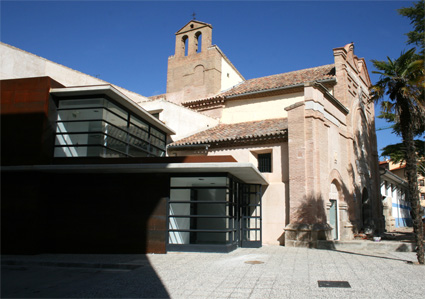
In the year 2007 it was inaugurated the new Museum of Calatayud that occupies part of an ancient convent that belonged to the Carmelite Order of Calatayud, located near the former road to Madrid, National II, in front of the Terrer Gate. In this museum there are exhibited archaeological pieces from the archaeological site of Bilbilis, located in the Bambola hill, about 6 km far away from Calatayud. So, we can see many remains of decoration in mural picture -frescos- from houses and thermae, rests of statues, the reconstruction of a cubiculum -bedroom-, inscriptions, coins, utensils, tools and instruments for the daily life, building materials, jewels, etc. Now we show some of these most important pieces. |
|
Museum of Calatayud. (Photo: Roberto Lérida Lafarga 16/03/2008) |
|
|
|
|
|
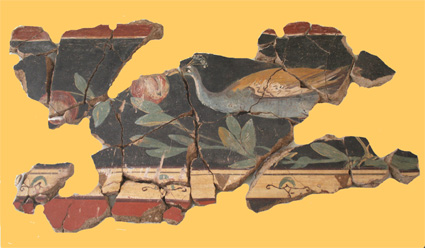
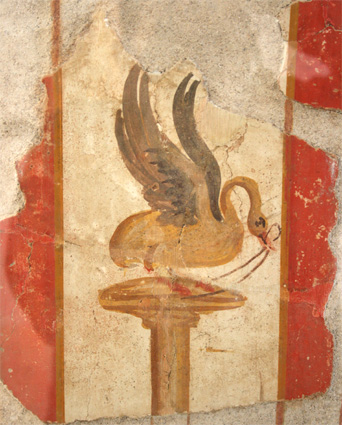
Fresco of the peacodk, from the room 29 of the domus 3 in the insula I of Bilbilis, dated in the first half of the I century a. C. (Photo: Roberto Lérida Lafarga 16/03/2008) |
|
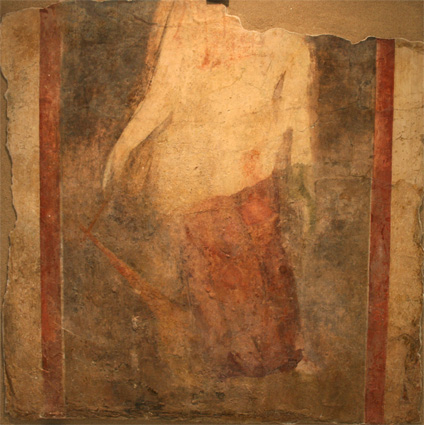
Fresco of the goodess Isis-Fortuna found in the domus that receives her name. (Photo: Roberto Lérida Lafarga 16/03/2008) |
|
|
|
|
|
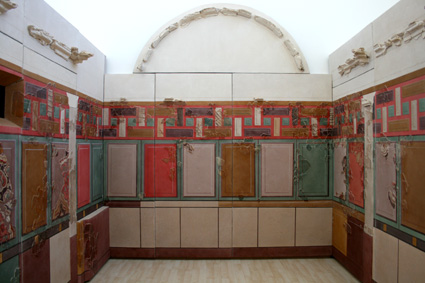
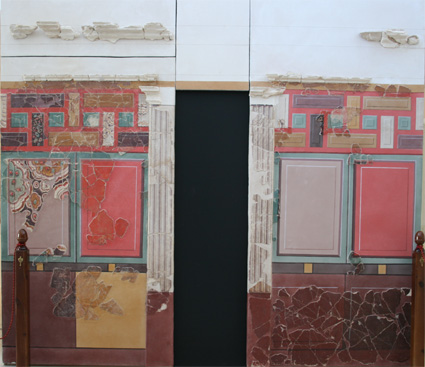
Cubiculum -bedroom- of the domus 2 in the insula I of Bilbilis, dated in the year 50 a. C. (Photo: Roberto Lérida Lafarga 16/03/2008) |
|
Opposite side of the cubiculum of the domus 2 in the insula I of Bilbilis. (Photo: Roberto Lérida Lafarga 16/03/2008) |
|
|
|
|
|
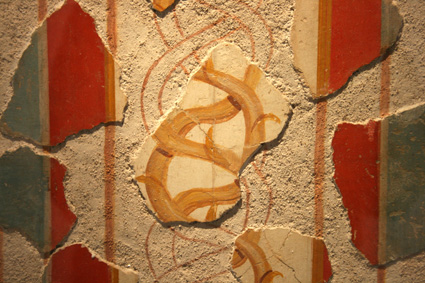
Fresco from the thermae of Bilbilis. (Photo: Roberto Lérida Lafarga 16/03/2008) |
|
Fresco from the thermae of Bilbilis. (Photo: Roberto Lérida Lafarga 16/03/2008) |
|
|
|
|
|
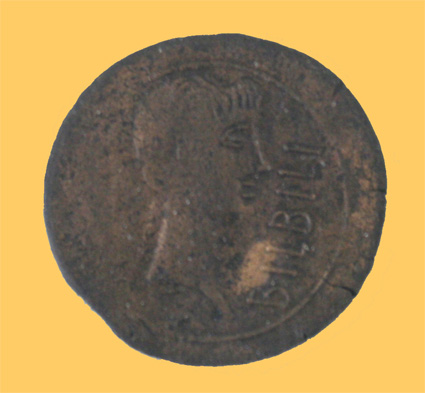
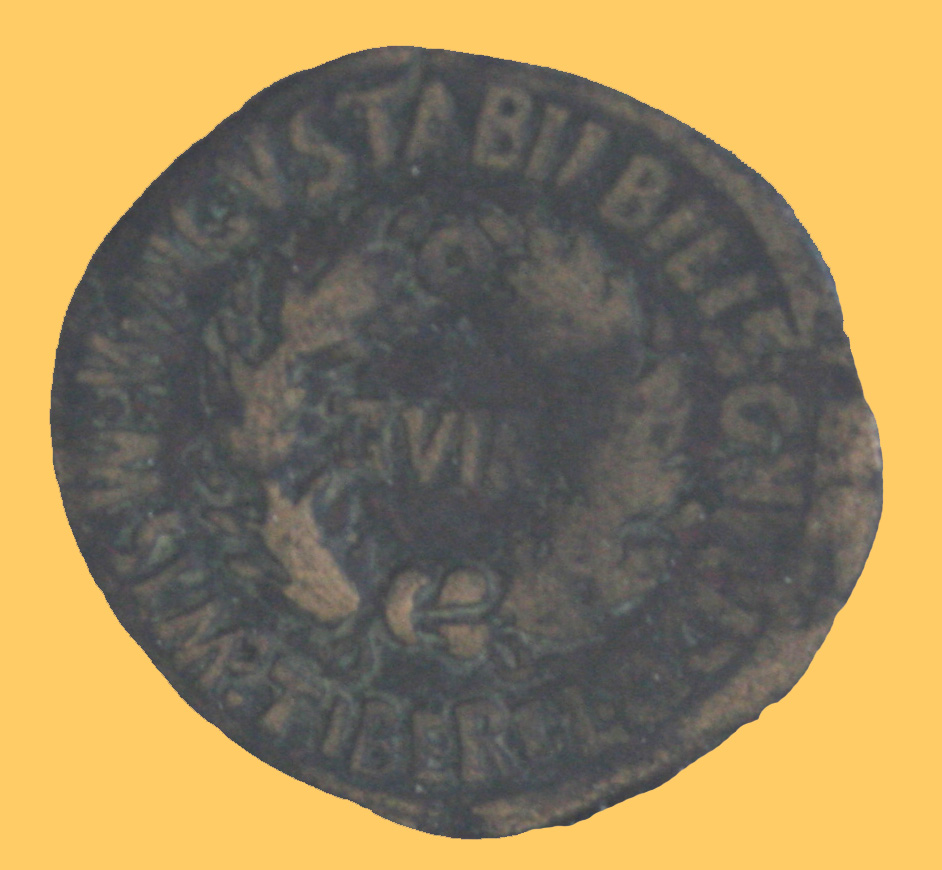
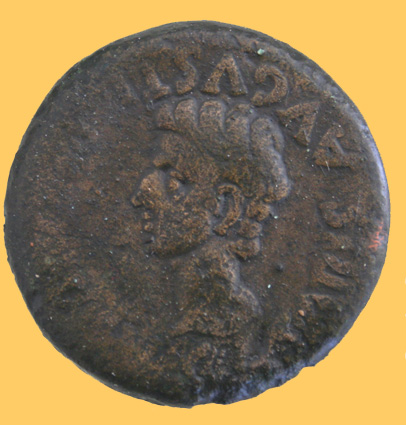
Coins of Bilbilis from the Roman age; on the left a bust, probably of an emperor; on the right the laurea. (Photos: Roberto Lérida Lafarga 16/03/2008) |
|
Coins of Bilbilis from the Roman age; on the left a bust, probably of an emperor; on the right the laurea. (Photos: Roberto Lérida Lafarga 16/03/2008) |
|
|
|
|
|
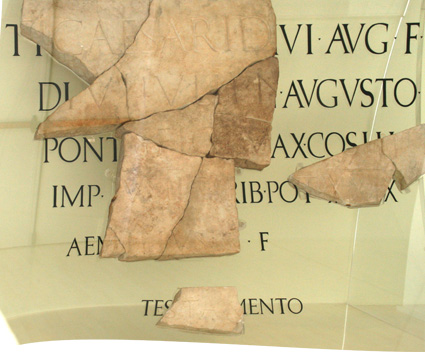
Inscription of L. Aemilius. (Photo: Roberto Lérida Lafarga 16/03/2008) The Latin text of the inscription says: TI(BERIO) CAESARI DIVI AUG(USTI) F(ILIO) DIVI IULI N(EPOTI) AUGUSTO PONTIFICI MAX(IMO) CO(N)S(ULI) III IMP(ERATORI) VIIII TRIB(UNICIA) POT(ESTATI) XXIX L(UCIUS) AEMILIUS C(AII) F(ILIUS) TESTAMENTO; its translation could be: "(Dedicated) to Tiberius Caesar Augustus, the divine Augustus' son, the divine Julius (Caesar)'s grandson, Highest Pontíff, Consul three times, emperor eight times, with the Power of the Tribuni twenty nine times. Lucius Aemilius, Gaius' son, (did it) according to his testament". |
|
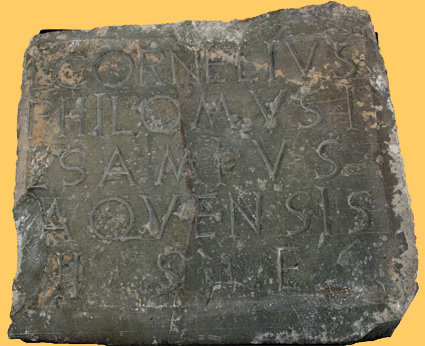
Inscription of L. Cornelius Samius. (Photo: Roberto Lérida Lafarga 16/03/2008) The Latin text of the inscription says: L(UCIUS) CORNELIUS PHOLUMUSI L(IBERTUS) SAMIUS AQUENSIS H(IC) S(ITUS) E(ST); its translation could be: "Lucius Cornelius Samius, Philomusus' libertus, Aquense -id est, from Aquae Bilbilitanorum, the modern Alhama de Aragón-, is buried here". |
|
|
|
|
|
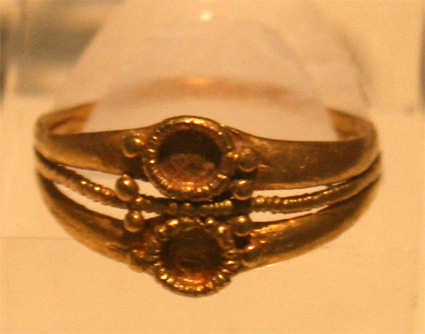
Gold ring from the age of the dynasty Julio-Claudia. (Photo: Roberto Lérida Lafarga 16/03/2008) |
|
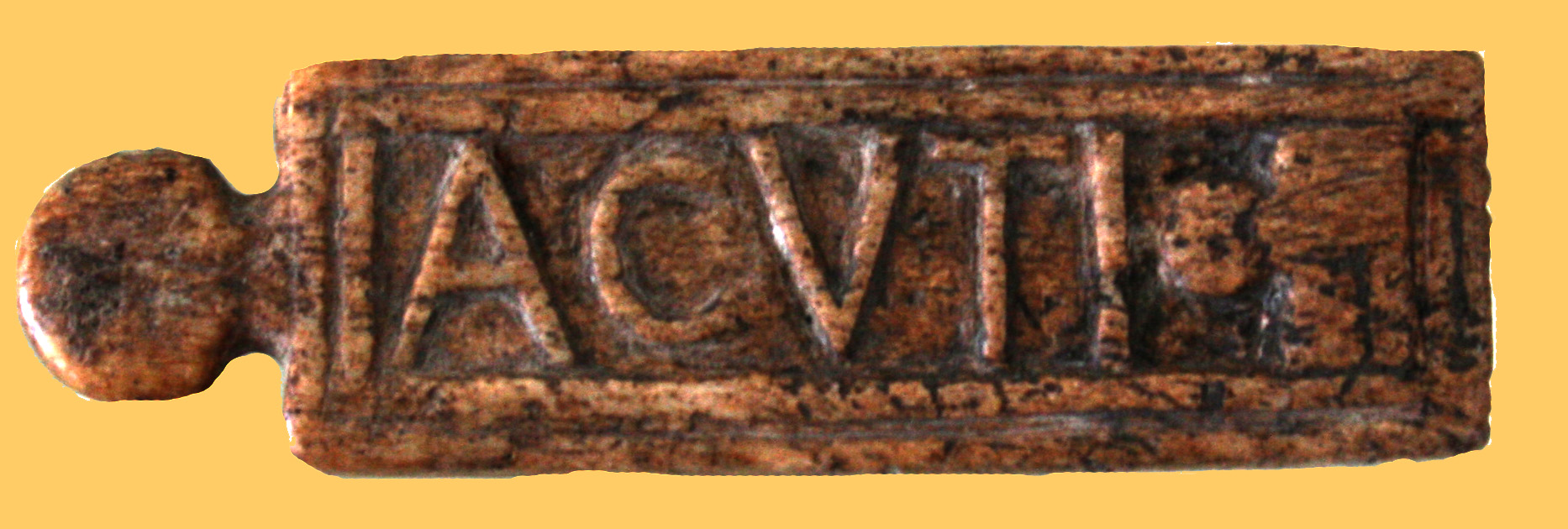
Bone piece of a coins counter from the mint of Bilbilis with the inscription ACUTI. (Photo: Roberto Lérida Lafarga 16/03/2008) |
|
|
|
|
|
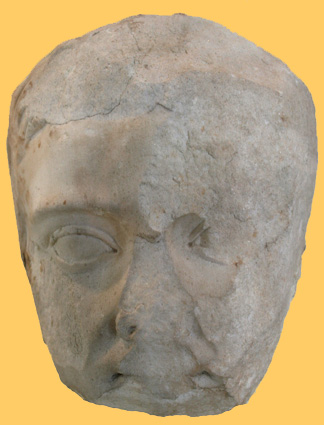
Childs portrait of the emperor Tiberius. (Photo: Roberto Lérida Lafarga 16/03/2008) |
|
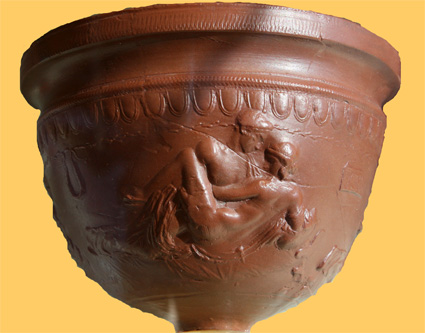
Vassel wit an erotic picture. (Photo: Roberto Lérida Lafarga 16/03/2008) |
|
|
|
|
|
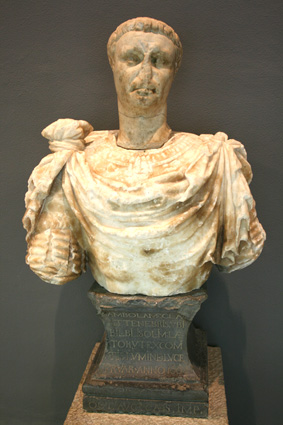
In the Provincial Museum of Zaragoza there are preserved some piece from Bilbilis; concretely there is a bust of the emperor Claudius; undoubtedly the bust belonged to a complete statue; it is made of marble from Paros (Greece) and it was remade on a previous bust of the emperor Caligula. In the Renaissance the head was put on other bust and it was added a inscription about the Bilbilitan origin of the statue. |
|
Bust of the emperor Claudius. Provincial Museum of Zaragoza . (Photo: Roberto Lérida Lafarga 16/03/2008) |