WEAPONS AND EQUIPMENT

|
|
WEAPONS AND EQUIPMENT |
|
|
In the Roman army, in the ages of the Monarchy and the Republic, the estate did not give weapons to the soldiers; so, every soldier had to pay his own weapons and he brought the weapons that he could; these weapons were made of bronze and iron and, of course, they were neither uniform nor regular. The riches could pay a spear, a long sword, a helmet, a cuirass, a kind of metallic boots and a round shield –clipeus-. |
|||||||||||
|
|
|
|
|||||||||
|
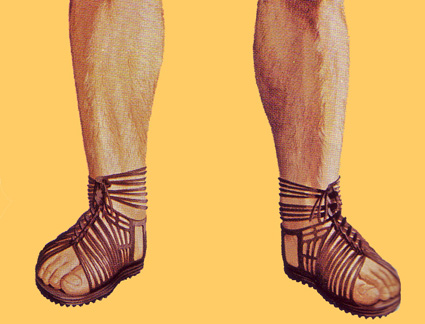
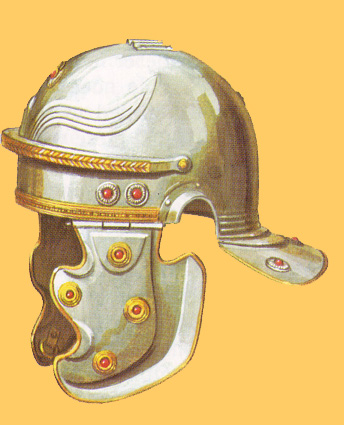
Later, still in the age of the Republic, the estate built public factories of weapons and it gave to every soldier and official a sagum –an open cuirass that was clasped with snap fasteners-, caligae –a kind of boot in leather with holes like sandals- and a cassis –helmet-. |
|||||||||||
|
|
|
|
|||||||||
|
|
|
|
|
|
|
|
|||||
|
Caligae |
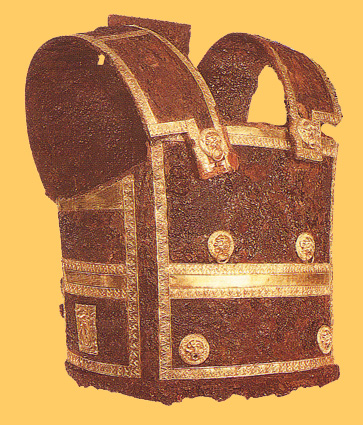
Sagum Photography from AA. VV.: Atlas ilustrado de la Antigua Roma: de los orígenes a la caída del imperio, Madrid, 2002 |
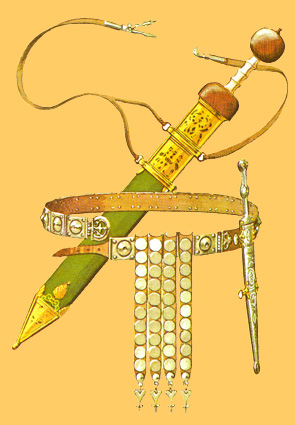
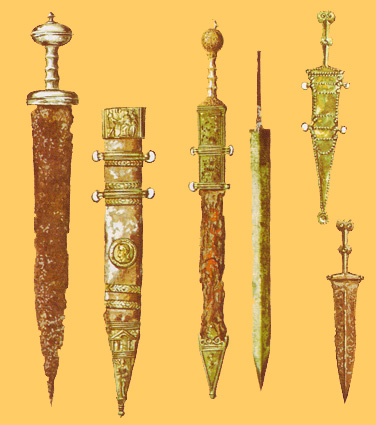
Belt with dagger and sword |
|
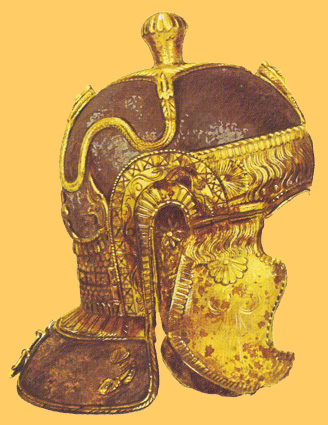
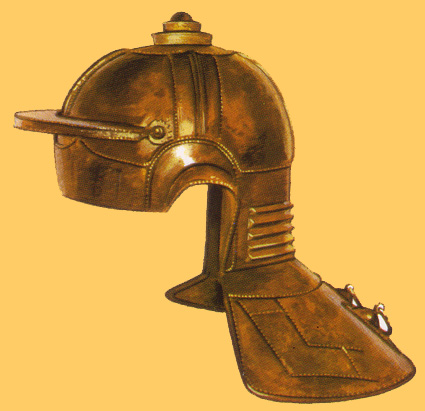
Different types of helmet from the Imperial age |
|||||||
|
|
|
|
|||||||||
|
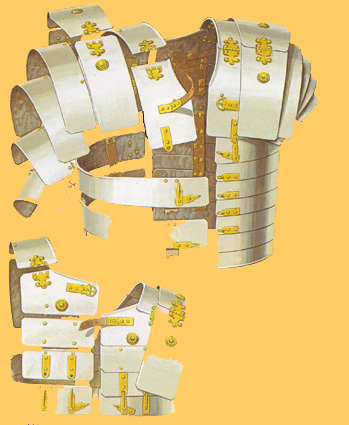
The heavy infantry had the following weapons: hasta –spears for the veterans-, pilum –javelin with wooden handle 1 meter long and an iron point 1 meter long too; it weighed 1,200 kgrs. and it had a range of 30 metres and even 60 metres if a leather strap (amentum) was used ; every soldier had two of them and they were used by hastati and principes and finally by triarii too-; gladius –a short, pointed and double-edged sword, 50 cms. long in the blade, used by all the infantrymen-; scutum –a wooden shield (0,75 x 1.20 metres), oval or convex in the III century b. C. and semi-cylindrical from the I century b. C.-; lorica –cuirass, at first made of iron plates and afterwards of coat of mail. |
|||||||||||
|
|
|
|
|||||||||
|
|
|
|
|
||||||||
|
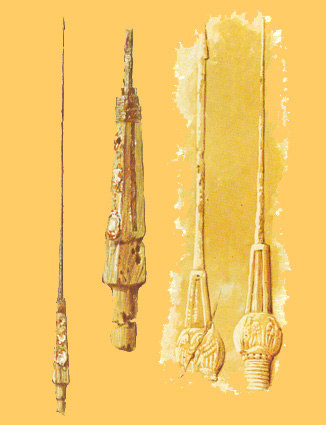
Iron points from different pila. |
Different types of gladii. |
Oval shield with metallic central support. |
Lorica segmentata, made in iron plates like fish's scales. |
||||||||
|
|
|
|
|||||||||
|
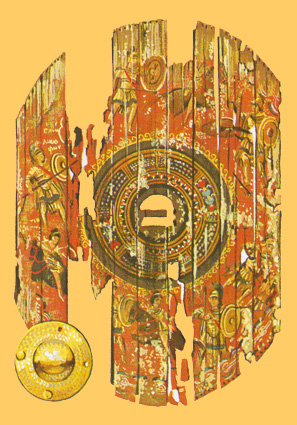
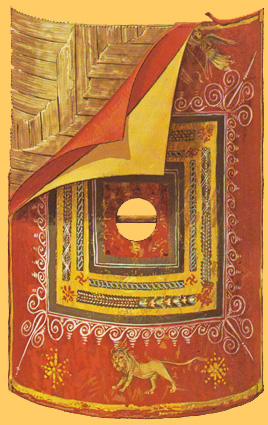
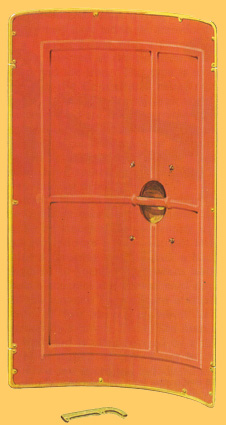
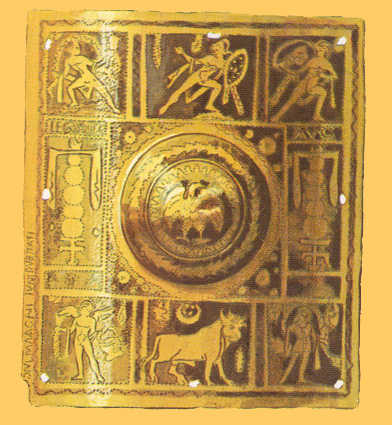
In the imperial age, the cuirass were considerably developed: from the ancient cuirasses made of bronze and leather, which they put on their thorax, to new cuirasses, the loricae squamatae, made with metallic plates superposed like fish’s scales. The oval and the round shields were substituted by square shields in the legion. These shields were made in wood and recovered with leather or metallic plates; in the centre the craftsmen put metallic pieces to reinforce the shields and to take up the force of the knocks, and at the same time these metallic pieces served to fix the handle where the soldier had to embrace the shield. |
|||||||||||
|
|
|
|
|||||||||
|
|
|
|
|||||||||
|
Square scutum from the imperial age: on the left we can see the wooden and leather layers; in the centre,the inner side of the shield with the handle; and on the left the metallic plate that covered the centre of the shield. In general the shields were decorated in rich colours with geometrical figures, human figures, animals, etc. |
|||||||||||
|
|
|
|
|||||||||
|
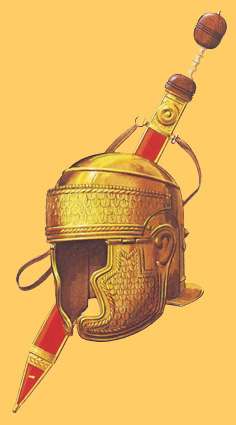
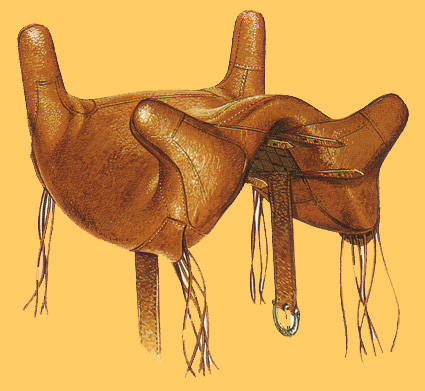
The cavalry had the following weapons: contus –light spear also used as javelin-, parma –round shield-, gladius and helmet. In addition, they used as equipment a seat to make comfortable the riding; these seats are not similar to our modern saddles, they had probably Celtic origin and they started to be used at the beginning of the imperial age. The light infantry could have had the following weapons: parma –round shield for the velites-, galea –especial leather helmet -, funda –sling with a range up to 180 metres-, arcus and sagittae –bow and arrows about 60 centimetres long-. |
|
Helmet and sword of a cavalryman. |
Saddle. |
||||||||
|
|
|
|
|||||||||
|
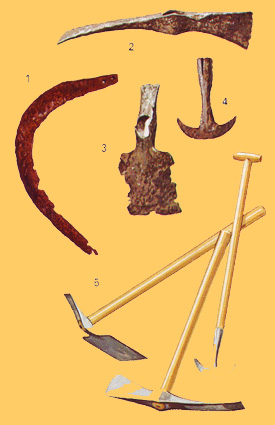
Besides the weapons the infantrymen had important equipment: so, it is said that Iulius Caesar won more battles with the tools and the equipment than with the weapons. We are talking about digging tools. When the Romans established a new camp, they had to dig a fosse and with the dug ground they made a rampart. In a similar way, they had to make ramparts in their tactics of siege. In addition, they used to prepare snares and protections dug in the ground. |
|
|
1-. Sickle. 2.- Pickaxe. 3.- Entrenching tool. 4.- Turf cutter. 5.- Reconstruction of digging tools. |
||||||||
|
|
|
|
|||||||||
|
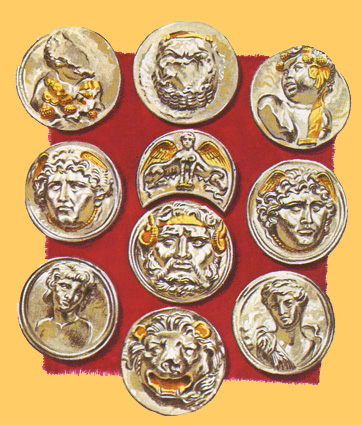
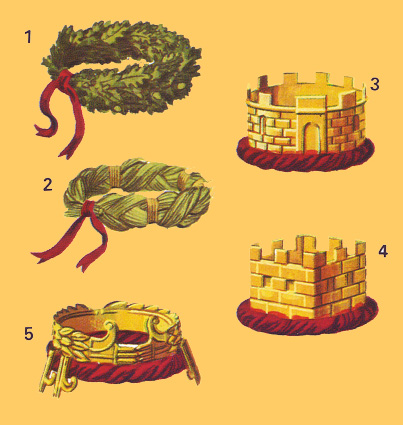
The officers had in their equipment decorative elements that indicated their triumphs, their status and their distinctions. So, the generals could be crowned, if they obtained a military victory; there were 5 different types of crowns: corona civica made of oak leaves; corona obsidionalis, made of grass; corona muralis – that represented a wall-, corona vallaris –that represented a palisade- y corona navalis –that represented a ship-, these three in general made of gold. The officers used to dress phalerae set on their cuirass; even in the imperial age the officers kept wearing the leather cuirass with the pattern of the human anatomy and with these medals decorated with human figures, with animals, with geometrical figures, with mythological animals, etc.; in addition, they could wear armillae –bracelets- and torques –collars-. |
|
Phalerae: normally made of silver and gold; they had probably a Celtic origin; they were dressed by the officers, but they were given to soldiers and subordinate officers as rewards. |
|||||||||
|
|
1.- Corona civica. 2.- Corona obsidionalis. 3.- Corona muralis. 4.- Corona vallaris 5.- Corona navalis. |
||||||||||
|
|
|
|
|||||||||
|
All the pictures from the different kinds of soldiers that appear in this web are taken from the reproductions of CONNOLLY, Peter: Greece and Rome at War, London, 2006, except those whose provenance is concretelly indicated. |
|
|
|||||||||
|
|
|
|
|||||||||
|
|
|
SOURCES: - CONNOLLY, Peter: Greece and Rome at War, Londres, 2006 - HACQUARD, Georges: Guía de la Roma Antigua, Madrid, 2003 |
|||||||||
|
|
WebQuest: Playmobil y el Ejército Romano |
|