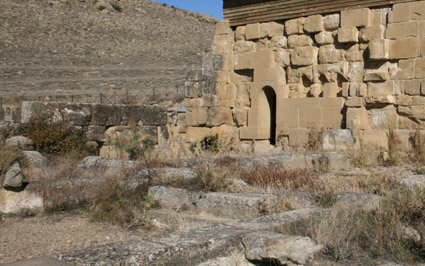
THERMAE OF THE BAÑALES IN UNCASTILLO (TARRACA)

|
THERMAE OF THE BAÑALES IN UNCASTILLO (TARRACA) |
|
|
Technically the thermae of Tarraca should respond to a the kind of thermae called “of angular corridor”, i. e., with a ground plan of square tendency and with circulation in its interior with turns of 90 degrees, due to a best adapting to the topography and to the plan inside a insula (block of flats) in the city. |
||
|
|
|
|
|
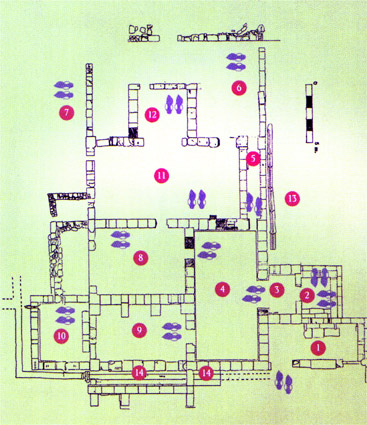
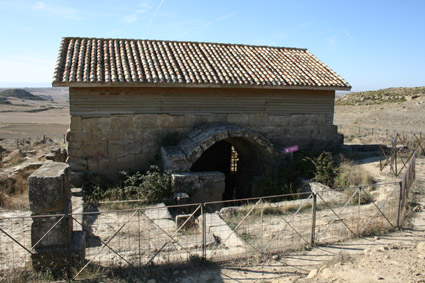
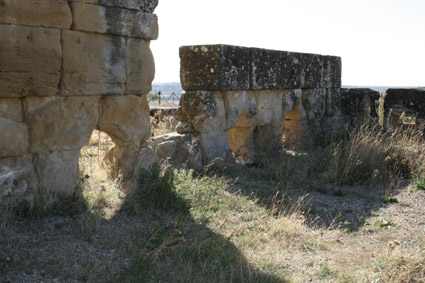
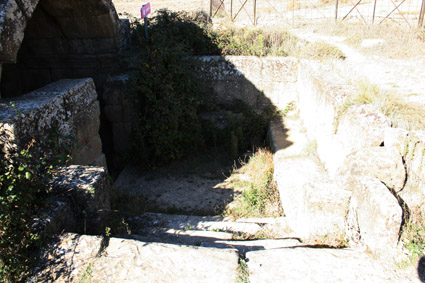
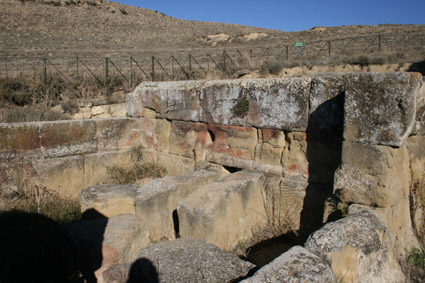
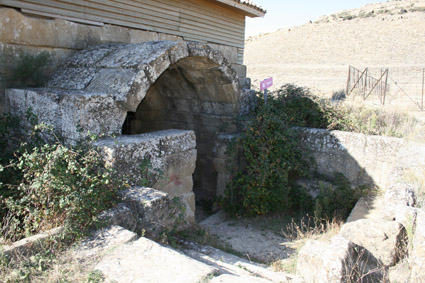
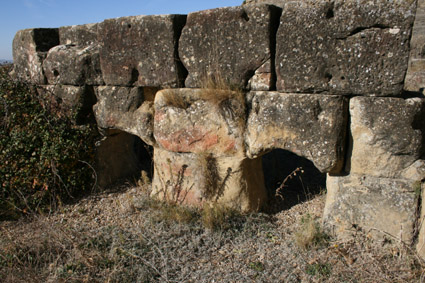
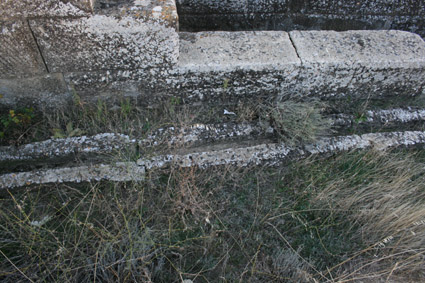
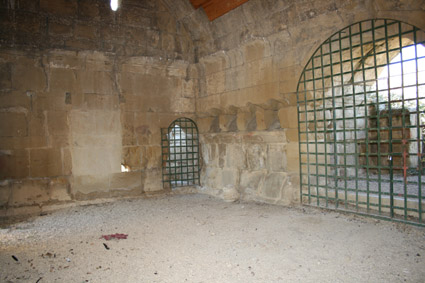
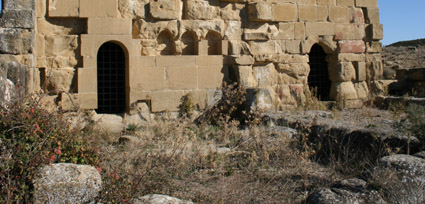
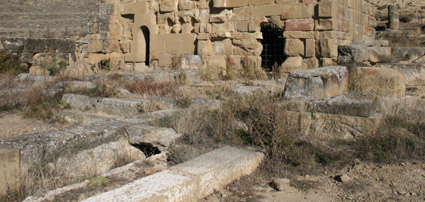
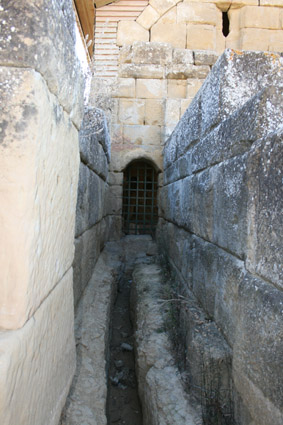
This was the structure of the thermae: people get into through a porch entrance with three arches (1) until a hall on the open air; after descending three steps people arrived to a exedra (2) with benches sculpted in the stone and decorated with mural in rich colours (red, yellow and green) where the servants and slaves waited; a vaulted hall (3), that still remains, connected the exedra with the apodyterium (4) –the cloakroom where clothes were guarded- with loculi –niches sculpted on the wall that were used as the nowadays lockers, usually closed by wooden doors- and probably with benches leaned against the wall; this hall was used as a business space, waiting room, meeting point and talking place; this is the best preserved part of the thermae; a corridor (5) with barrel vault led to the gymnasiums (6 and 7) that were outdoors; from the apodyteium people passed to another hall that could be an elaeothesium or destrictorium (8), i. e., a hall destined to massages with scented oils –called unctiones or tractationes- and to depilation; from the apodyterium or from the elaeothesium upstairs it was possible to go to a pool of tepid baths –tepidarium (9)- through a stair called suspensura; from here people passed to a pool of cool water –frigidarium (10)- whose depth -1,20 meters-shows that it was not used as a swimming pool, but a pool to ablutions, and whose ground floor and its walls were covered by hydraulic opus caementicium in order to prevent water escapes; this frigidarium had stairs to descent to and a drain through a lead pipe –tubulus- that is preserved in the Provincial Museum of Zaragoza; in other hall there were the hot baths –caldarium (11)-, directly connected with the laconicum or concamerata sudatio (12), similar to a sauna to transpire; outside the building a conduit of water (13) can be seen that went out directly from some halls (3 and 4) and, finally, a drain that run parallel to the walls of other halls (4 and 9) to evacuate the sewage. |
||
|
1.- Porch entrance |
|
Halls and parts of the thermae of the Bañales according to ORTIZ PALOMAR, Esperanza: “Los Bañales (Uncastillo). El tiempo ausente del espacio vigente. Baños Romanos”, en AA. VV.: ArquEJEAlogía. Ejea de los Caballeros y las Cinco Villas, de la Prehistoria a la Antigüedad Tardía, Zaragoza, 2006
|
|
|
2.- Exedra |
|
||
|
3.- Halfway porch passage |
|
||
|
4.- Apodyterium |
|
||
|
5.- Corridor |
|
||
|
6.- Gymnasium |
|
||
|
7.- Gymnasium |
|
||
|
8.- Elaeothesium o destrictorium |
|
||
|
9.- Tepidarium |
|
||
|
10.- Frigidarium |
|
||
|
11. Caldarium |
|
||
|
12.- Laconicum o concamerata sudatio |
|
||
|
13.- Conduits of water |
|
||
|
14.- Drain |
|
|
|
|
|
|
1.- Porch entrance |
6.- Gimnasio |
11. Caldarium |
|
|
|
|
|
2.- Exedra |
7.- Gimnasio |
12.- Laconicum o concamerata sudario |
|
|
|
|
|
3.- Halfway porch passage |
8.- Elaeothesium o destrictorium |
13.- Conduits of water |
|
|
|
|
|
4.- Apodyterium |
9.- Tepidarium |
14.- Drain |
|
|
|
(Photographies: Roberto Lérida Lafarga 3/11/2007) |
|
5.- Corridor |
10.- Frigidarium |
|
|
|
|
Sources: - ORTIZ PALOMAR, M.ª Esperanza y PAZ PERALTA, Juan Ángel: Los Bañales (Uncastillo). Los Atilios. La Sinagoga (Sádaba), Zaragoza, 2005 - ORTIZ PALOMAR, Esperanza: “Los Bañales (Uncastillo). El tiempo ausente del espacio vigente. Baños Romanos”, en AA. VV.: ArquEJEAlogía. Ejea de los Caballeros y las Cinco Villas, de la Prehistoria a la Antigüedad Tardía, Zaragoza, 2006 - ORTIZ PALOMAR, M.ª Esperanza y PAZ PERALTA, Juan Ángel: “La vida corriente de las aguas en el Aragón romano. Trabajos públicos y placeres privados”, en AA. VV.: Aquaria: Agua, territorio y paisaje en Aragón, Zaragoza, 2006 |