TURIASO: HISTORICAL CONTEXT

|
|
TURIASO: HISTORICAL CONTEXT |
|
|
Turiaso is the name of a Celtiberian city that usually has been located in the location of its successor Tarazona. However, only a few Celtiberian remains of this city have been discovered, so that in some occasions the scholars hesitate that the modern Tarazona was on the ancient Celtiberian Turiaso; so, this city was not on the Queiles river, but in other location and, in the I century b. C., as it happened in other Celtiberian cities, the Roman city of Turiaso was moved to its modern location of Tarazona from other place. As a result of this lack of information, because the scholars have not found remains that allow us to locate the Celtiberian Turiaso in a different location from the Roman Turiaso, the most sensible thing is to keep thinking that Tarazona is a continuous city, first Celtiberian and then Roman, and interruptedly inhabited until the present. |
||
|
|
|
|
|
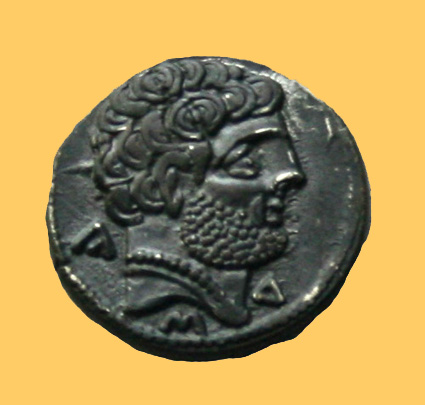
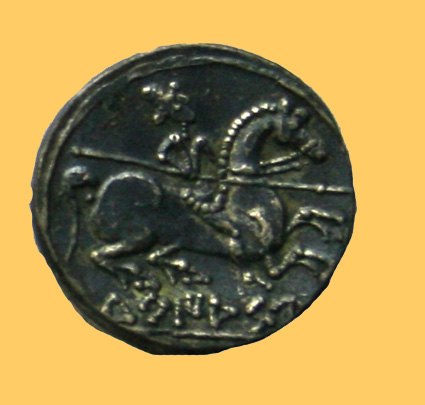
The Celtiberian Turiaso belonged to the limits of the lusoni –Celtiberian people-, together with Bursao (now Borja, Zaragoza), Caravis (now Mallén, Zaragoza) y Caiscata (the Roman Cascantum, now Cascante, Navarra). Turiaso minted, besides bronze coins, abundant silver coins, with a large geographical diffusion along the Duero valley, the Ebro valley, Sierra Morena and Catalonia and sporadically in the Portuguese territory and Cantabria. Its coins were diffused between the end of the II century and the I century b. C., grouped together with coins from Nertobis (near the modern La Almunia de Doña Godina, Zaragoza), Caiscata and Bursao; the coins from Turiaso could be the model for the other coins. |
||
|
|
|
|
|
Related to the proper name of the city of Turiaso, it belongs to the Celtic onomastic, where appear, among other, hydronyms (names of rivers, lakes, seas, etc.) that had as base an alternative root voiceless/voiced *tur-/dur- (there is a Celtic root *dur); this root is also linked with the name of the Duero river (in Latin Durius). The link of the name of the city with a hydronymic value reinforced the important rol of the water in the neighbourhood of Turiaso.
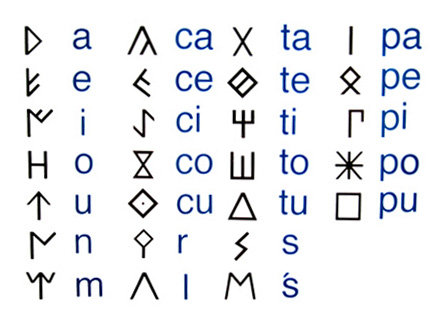
Turiaso written in iberian signarium: turiasu |
|
Iberian signarium in a panel in the Provincial Museum of Zaragoza. (Photo: Roberto Lérida Lafarga 03/01/2008) |
|
|
|
|
|
We have only scarce information about the Roman Turiaso thanks to the classical sources. Turiaso is mentioned several times: Plinio III 3, 24, says that it was a city with Roman rights and Pliny XXXIV 144, he alludes to the good quality of the Celtiberian iron worked in Bilbilis and Turiaso. The Bilbilitan poet Martial mentioned it in some of his poems. Ptolomaeus gave some datum too. The Antoninian and Ravenate Itineraries located it in their routes. |
||
|
|
|
|
|
Nevertheless, the numismatic, the epigraphy and, above all, the archaeology have allowed to extend our knowledge about the ancient Turiaso. |
|
Coins from Turiaso. Provincial Museum of Zaragoza. (Photos: Roberto Lérida Lafarga 03/01/2008) |
|
|
|
|
|
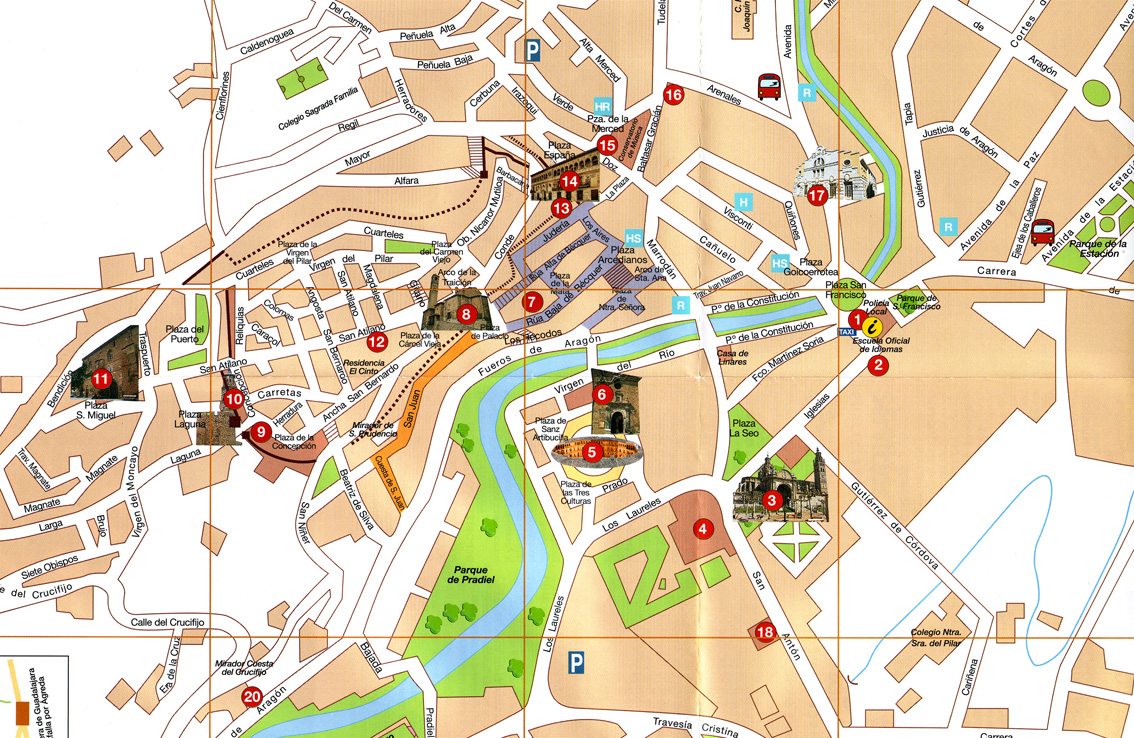
The city suffered a deep transformation along the I century b. C., it was finally settled in the left bank of the Queiles river. The city centre was in the modern Tudela street and its extension in the Rua alta de Bécquer, crossed by a perpendicular axe corresponding to the modern Carmen and Visconti streets; other modern streets like Madorrán, Quiñones and Cañuelo were plainly urbanized in this century. The upper side of the city was not urbanized then and probably kept out of the urban area; on the other hand, streets like Theather street or the Rudiana zone are the testimony of an industrial activity in that age. Once the Roman civil wars finished, the uptown was not inhabited, because it was neither comfortable nor practical, while the right bank of the river started to be inhabited, according to the remains found in some areas (Pradiel, Eguaras Palace, the Cathedral, Cinco Villas street, Borja street, the road to Saragossa, etc. So, the most ancient remains were found in the ancient road that connected Caesar Augusta and Asturica Augusta (nowadays Astorga, León). The cardo -main city from the north to the south- and the decumanus -main city from the east to the west- of the Roman city it is identified with San Atilano and San Bernardo streets, respectively. |
|
|
|
|
|
|
|
Scholars have detected destructions and a progressive abandonment of the city during the III century a. C.; at the same time the rural villas were multiplied, according to the excavations in some areas of the city (Joaquin Costa college, Cinco Villas street, Barrioverde) and late burials (in Hogar Doz, Eguaras Palace). The instability of the Empire and the invasions of the Bagaudas in the V century a. C. were the reasons of this progressive abandonment; at the same time, in the city and in the region, since the IV century a. C., the testimony of military elements became more common. |
||
|
|
|
|
|
So, in the Late Empire, the most usual townships were rural villas in the road from Caesar Augusta to Asturica Augusta and in the roads that connected Turiaso and Cascantum and Gracchurris (now Alfaro, La Rioja). They are located near the water, in areas with a good visibility and they had an eminently farming function and, some times, craft function. |
||
|
|
|
|
|
On the other hand, Turiaso was incorporated to the conventus iuridicus Caesaraugustanus as municipium with Latin rights in the age of Augustus; the concession of the status of municipium took place in the first years of the empire, at the end of the I century b. C. as a reward for the support that Tusiaso brought to Julius Caesar in his war against Cnaeus Pompeius, so that the clientelae that the dictator obtained were kept by Augustus later. In fact, there are testimonies of the presence of a citizen who belonged to the tribe Galeria, which traditionally is considered a clientele that followed the dynasty Julio-Claudian. On the relationship between Turiaso and the first emperor, Augustus, the professor Miguel Beltran thinks that it is possible that Augustus stayed some time here to overcome an illness and to benefit from the curative water of Turiaso. So, it is demonstrated the imperial cult to Augustus in Turiason along all the Early Empire, first, thanks to the minting of coins in the age of the second emperor, Tiberius, with the divinization of Augustus and, second, thanks to the existence of an Augustus’ head made on a former portrait of the emperor Domitianus at the end of the I century a. C. or Nerva in the II century a. C. |
||
|
|
|
|
|
|
|
SOURCES: - GARCÍA SERRANO, José Ángel: Arqueología del Moncayo. Catálogo de la exposición permanente, Tarazona, 2003 - AA.VV.: Las aguas sagradas del Municipium Turiaso. Excavaciones en el patio del Colegio Joaquín Costa (Antiguo Allué Salvador). Tarazona (Zaragoza), (Caesaraugusta 76), Zaragoza, 2004 |