BUILDING PROBLEMS

|
|
BUILDING PROBLEMS |
|
|
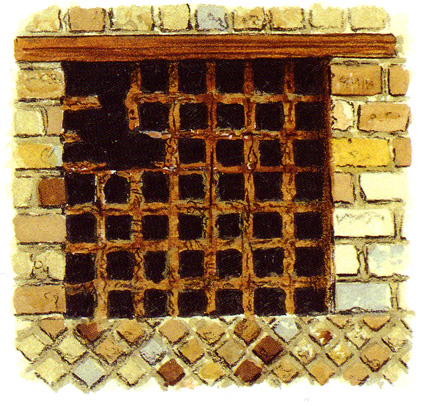
In the Roman houses the fires were very frequent. The insulae were built with wooden timbers and the Romans used portable spirit lamps, candles, torches, oil lamps, etc. to cook and to heat up; in addition the supply of running water rarely reached the insulae, so the fires were the order of the day and their smothering was a very hard work, because the fires propagated very quickly to other cenacula in the same insula and even to other insulae. Other building problem was the lighting: although the insulae had big gaps in their walls, their disposition according to the hour allowed the entrance to enough light and air or quite the reverse; only in the domus the windows could have like our glasses sheets of opaque glass of sheets of lapis specularis, a kind of gypsum that, if it was thinly cut, allowed the entrance of light, like the alabaster (in the Roman age near Segobriga, nowadays near Saelices in Cuenca, Spain, there was an important deposit of this kind of stone that was imported around the empire). However, in general the buildings had relatively big windows with cloth or leather curtains, with wooden shutters in the windows and even with iron or terracotta bars with the shape of a grille.
|
|
Iron bars in a window from Pompeii (Italy). Photography from CONNOLLY, Peter y DODGE, Hazel: La Ciudad Antigua. La vida en la Atenas y Roma clásicas, Madrid, 1998. |
|
|
|
|
|
The heating became another building problem. In the insulae there was not central heating neither chimneys neither stoves; only some ovens located in tabernae had chimney; that is why the heating in the insulae was based on portable elements like spirit lamps or braziers made in cupper or bronze- with hot coals and hot ashes that produced gazes –sometimes poisonous- due to a bad combustion and to the dryness in the atmosphere. Only the domus could have a heating system; these systems were often connected with the private bath complex; so a hypocausus –ovens fed with wood and coal- and hypocaustum –oven and underground combustion chamber; in that case the ground –called suspensura- was placed over this chamber and it was connected with pipes in the wall –tubuli parietales-; this system allowed a global heating in most of the rooms in a domus. |
||
|
|
|
|
|
The supply of running water differentiated the domus from the insulae. The former could store the rain water that felt through the impluvia in compluvia and in cisterns; at the same time the used to received running water from the aqueducts to have private thermae and balnearia. The latter did not receive water; in general, in Rome, in a distance less than 40 metres there was a fountain with running water in the streets, but they had to go to these fountains to take water. Rome had 247 cisterns or deposits –castella- that supplied water to the fountains to public consumption. However, in the sumptuous insulae the owners or tenants of the ground floor –also called domus- could have small deposits to a moderate private consumption. So, in the insulae there used to be water carrier –aquarii-, slave of lower importance who used to pass as property in the sale or rent of a insula or of the domus of a sumptuous insula together with the porters –ostiarii- and the sweepers –zetarii-. At the same time, the insulae did not have drainage or in any case only in the ground floor, while the domus were connected to the sewerage or they had septic tanks where they diverted their sewage. So, at best the inhabitant of the insulae used like chamber pots a kind of vessel called lasana or chairs-lavatory –sellae pertusae- that they emptied out in a large earthen jar –dolium- that used to be under the building stairs; the sewage were taken by fertilizer companies; in other cases there were not dolia and the Romans must have gone to a near dunghill where they threw the sewage or, much more frequently, they threw the sewage through the window to the street: the passers-by had the risk of being showered by this sewage. |
||
|
|
|
|
|
An additional problem of the insulae was the price and the rental agreement; the owners of the insulae used to rent the cenacula for five years and their responsibilities were to keep safe the cenacula, to recruit and to distribute the tenants, to keep the peace between neighbours and to collect the rent every three months. However, if a tenant could not pay the rent, he resorted to sublease rooms of his cenaculum; this fact produced the overcrowding of population in the building and the accumulation of dust, litter and detritus in it. |
||
|
|
|
|
|
|
|
SOURCES: - CARCOPINO, Jerôme: La vida cotidiana en Roma en el apogeo del Imperio, Madrid, 1993 - CONNOLLY, Peter y DODGE, Hazel: La Ciudad Antigua. La vida en la Atenas y Roma clásicas, Madrid, 1998 - PAOLI, Ugo Enrico: URBS. La vida en la Roma Antigua, Barcelona, 1990 |