BILBILIS AUGUSTA: WALLS

|
|
BILBILIS AUGUSTA: WALLS |
|
|
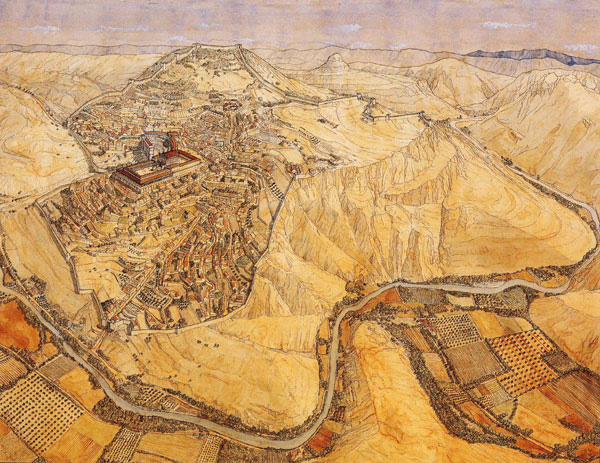
The impressive view of the city of Bilbilis with its forum, theatre and monuments was completed with its imposing walls that were built as a symbol of status, prestige and wealth of a powerful city and as limit of the city rather than to protect it from potential enemies, because the city was built in times of peace –and, of course, the walls were not necessary- and until some centuries after, when the city was in full decline and large abandonment, the region did not run the risk of being invaded. So, the main role of the walls was the propaganda of the Roman system and the pride of a city that wanted to impress to those who went across the via Augusta Emerita, not only with its public buildings, but with large walls. The view of the hill with the walled belt must have been really impressive. The walls were perfectly adapted to the terrain, so that its plan is irregular, with bastions and towers to help, defend and watch; in the walls there were three gates, two for chariots and one exclusively for pedestrians and, probably, there was some poterna –minor gates that have exit out the walls to a pit or a rampart-, still not identified. |
|
Reconstruction of the city of Bilbilis, where you can see the plan of its walls. |
|
|
|
|
|
One of the most interesting aspects of the walls of Bilbilis was its extension, because they sheltered inside them 30 hectares (74.130 acres). In its origin, part of the walls was Celtiberian and they were started in the II century b. C, surrounding the Bambola hill. With the increase of the city in population and importance in the age of the emperor Augustus it was necessary to demolish part of the walls in the eastern part of the city and to increase their perimeter. Architecturally the walls were built with two parallel walls 2,5 metres wide as maximum, made of irregular blocks of stone, put dry, with their plain face in the outer side and refilling the holes with small stones like wedges, while the inner side between the walls it was refilled with stones, rubble and land. |
||
|
|
|
|
|
|
|
Sources: - MARTÍN BUENO, Manuel y SÁENZ PRECIADO, Juan Carlos: Bilbilis, Calatayud, Zaragoza, 2005 - MARTÍN BUENO, Manuel y MAGALLÓN BOTAYA, M.ª Ángeles: Cuaderno de campo Grupo URBS: Bilbilis y Labitolosa, Zaragoza, 2006 |