BILBILIS AUGUSTA: THERMAE

|
|
BILBILIS AUGUSTA: THERMAE |
|
|
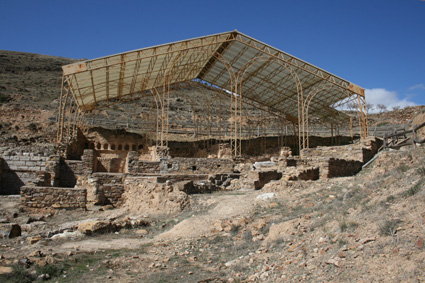
Other building excavated and well preserved in Bilbilis is the thermal complex, the thermae, which was covered by a metallic structure to protect them from the inclemency of the weather. They were located in the middle high zone of the city, settled on one of the hillsides of the Bambola hill. They are surrounded by some cisterns that supplied to it the water and some of the sewers and drainages where the residual water flew are still visible.
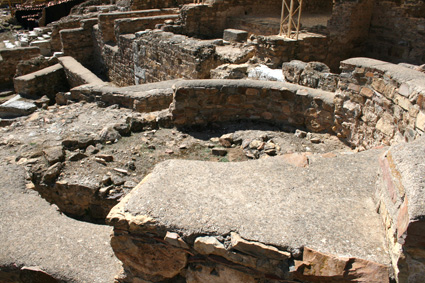
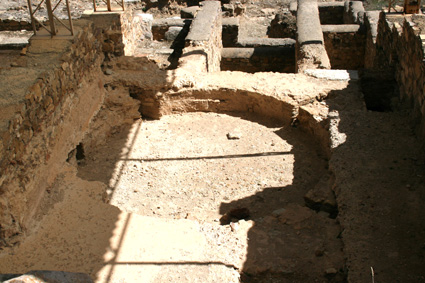
Round hall in the thermae of Bilbilis; we do not know its use for the moment. ( Photo: Roberto Lérida Lafarga 16/03/2008) |
|
View of the thermae with its metallic covering. (Photo: Roberto Lérida Lafarga 16/03/2008) |
|
The thermae of Bilbilis preserve all the rooms typical of a thermal complex. They were built in the first years of the empire, as the rest of the monumental centre of Bilbilis. However, the archaeologists have discovered three phases of use; the two first took place in the I century a. C. due to the original space became insufficient from the first moment. So, in the age of the emperor Claudius or Nero the space of some rooms was amplified and the ritual course inside the thermal complex was modified, while part of the installations of heating and hot water was modified too.
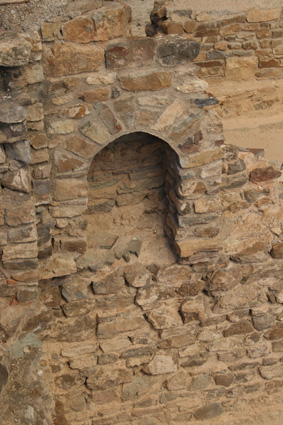
Vaulted niche in the apodyterium of the thermae of Bilbilis. (Photo: Roberto Lérida Lafarga 16/03/2008) |
|
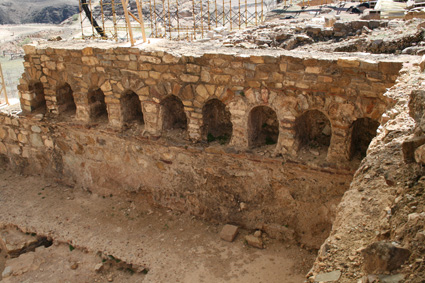
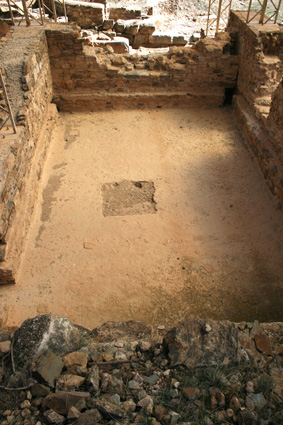
Apodyterium of the thermae of Bilbilis. (Photo: Roberto Lérida Lafarga 16/03/2008) |
|
In the thermae the apodyterium makes stand out; it was the changing room where the bathers left their clothes; the vaulted niches on the walls, used as wardrobes, are exceptionally preserved; also we can see the hot water pool –caldarium- and cold water pool –frigidarium-, the system of heating –hypocaustum-, a schola labrum –a cold water basin inside a warm hall- near the caldarium, latrines and other halls. All this means the pleasure of the comforts and luxuries, and, at the same time, an economical power of the city and its citizens to build theses infrastructures.
Caldarium of the thermae of Bilbilis. (Photo: Roberto Lérida Lafarga 16/03/2008) |
|
Frigidarium of the thermae of Bilbilis. (Photo: Roberto Lérida Lafarga 16/03/2008) |
|
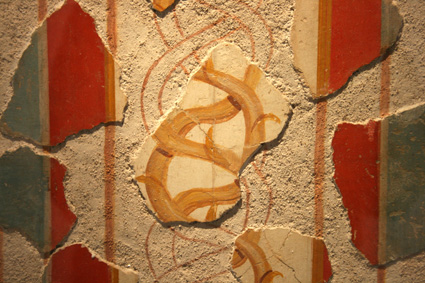
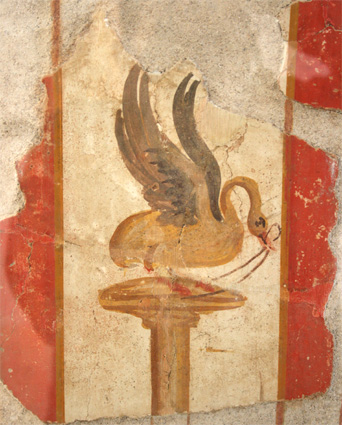
The halls of the thermae were decorated on the Roman style with pictures of good quality that were made by Italic pictures –painters- who worked along the Ebro valley and in the Meseta (Bilbilis, Arcobriga, Tiermes, etc.); their work makes stand out for its quality, its variety in compositions and its use of colours like the red and blue, considered very expensive and of high quality.
Fresco from the thermae of Bilbilis. Museum of Calatayud. (Photo: Roberto Lérida Lafarga 16/03/2008) |
|
Fresco from the thermae of Bilbilis. Museum of Calatayud. (Photo: Roberto Lérida Lafarga 16/03/2008) |
|
In the III century a. C. the abandonment of the installations and their use as store took place. |
||
|
|
|
Sources: - MARTÍN BUENO, Manuel y SÁENZ PRECIADO, Juan Carlos: Bilbilis, Calatayud, Zaragoza, 2005 - MARTÍN BUENO, Manuel y MAGALLÓN BOTAYA, M.ª Ángeles: Cuaderno de campo Grupo URBS: Bilbilis y Labitolosa, Zaragoza, 2006 |